
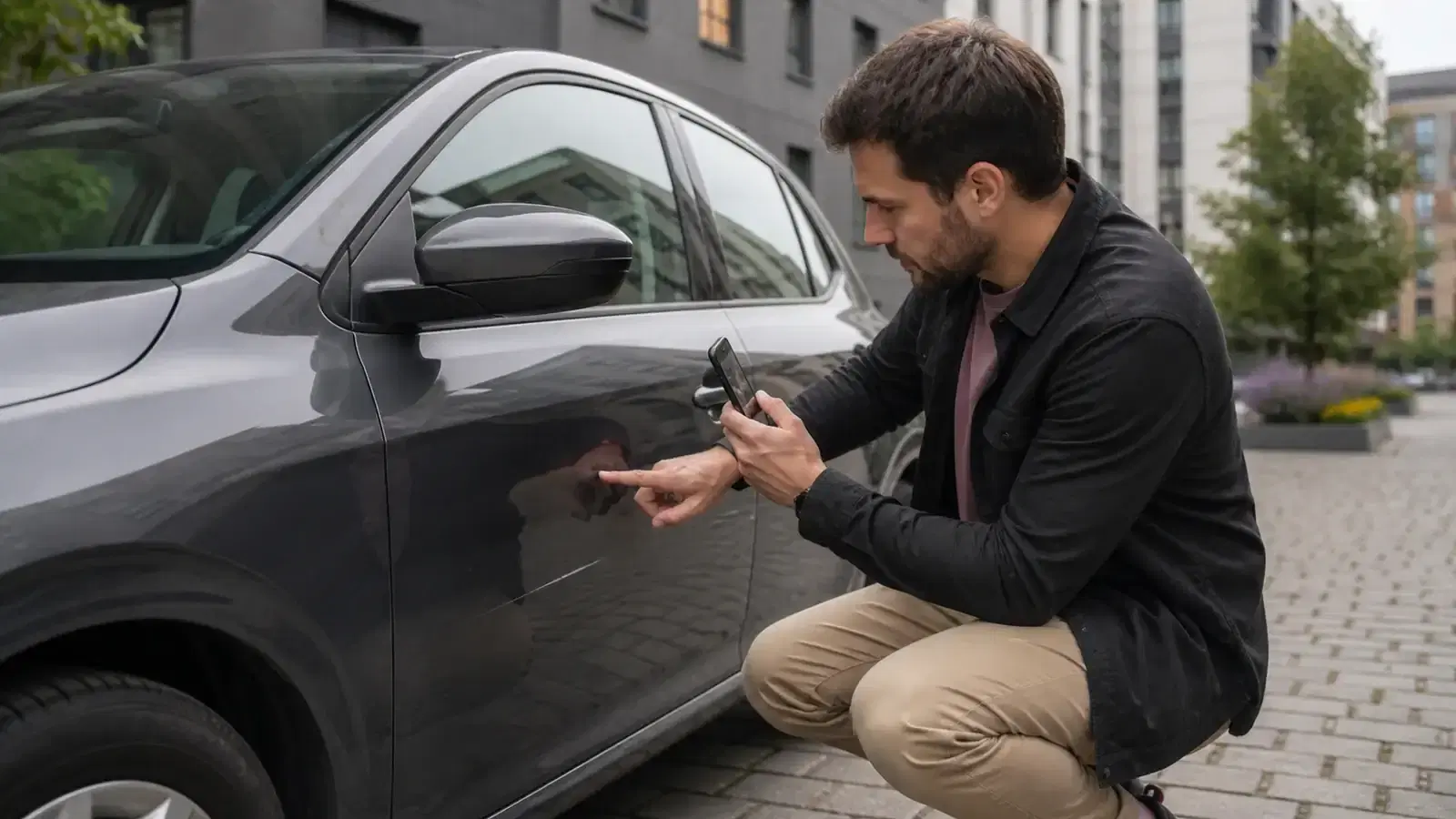
Do not choose a rental on the daily rate alone. Confirm the total payable price, how the deposit is held, the damage excess and exclusions, mileage, fuel or charging rules, authorised drivers, permitted territory and the return procedure. At pickup, record every side of the car, existing damage, mileage and fuel level. At return, keep time-stamped evidence of the car, location, mileage, fuel and key handover until the final invoice and deposit release are complete.
1. Compare the final price, not the headline rate
The daily rate may exclude delivery or airport fees, an additional driver, young-driver charges, child seats, cross-border permission, extra mileage, late pickup and optional protection. Save the checkout page or agreement showing the complete amount and everything included before you pay.
Compare like with like: identical dates and hours, fuel policy, mileage and protection level. A dramatically cheaper offer often represents a different allocation of risk rather than a bargain. Card issuer and currency-conversion charges sit outside the rental price but still affect what the trip costs you.
| Question | What to record |
|---|---|
| Rental period | Exact start, end and late-return tolerance |
| Mileage | Unlimited or the allowance and excess-mile rate |
| Fuel or charge | Required return level and refuelling administration fees |
| Extras | Drivers, seats, delivery and cross-border use |
| Deposit | Amount, payment method and expected release time |
2. Separate third-party cover, vehicle damage and the excess
A rental car in the EU must carry third-party liability cover, but that protects against damage or injury caused to other people. It does not automatically pay for repairs to the rental car, theft, injury to the driver or personal belongings. Optional protection may reduce your liability without covering every event.
The excess is the portion you remain responsible for on a covered claim. Read the exclusions: glass, tyres, wheels, the underside, interior, keys, misfuelling and damage caused by an unauthorised driver are often treated separately. Establish whether the protection waives liability at source or requires you to pay first and claim reimbursement later.
Sources: Your Europe
3. Verify the driver, documents and permitted territory
Your licence must remain valid for the entire rental and cover the vehicle. A valid EU licence is recognised elsewhere in the EU, but provisional documents may not be. The owner may also impose a minimum age or driving-experience requirement as a contractual condition.
Every person who may drive should be named in the agreement. Obtain written approval before crossing a border, boarding a ferry, using unpaved roads or returning in another place. Cross-border travel can require extra documentation, insurance or breakdown cover.
Sources: Your Europe, Your Europe
4. Run a five-minute condition audit at pickup
Inspect in usable light. Photograph every side and corner, roof, glass, lamps, wheels and tyres. For each scratch, take a close view and a wider view that proves its location. Video can add context but should not replace clear still photographs.
Inside, record seats, dashboard, boot and the supplied charging cable or emergency kit. Photograph mileage and fuel or battery level. Make sure every issue appears on the condition record and is acknowledged in writing or in the app. If dirt or darkness prevents inspection, record that before leaving.
Checklist
- All four sides and corners
- Glass, lamps, wheels and tyres
- Roof, sills and visible underside
- Cabin, boot and supplied equipment
- Mileage and fuel or charge level
- Written acknowledgement of existing damage
5. Use the vehicle only as agreed
Stay within the mileage and territory limits, never hand the wheel to an unauthorised driver, and use the correct fuel or charging method. If a warning light, puncture or unusual noise appears, call the assistance number before arranging work yourself. Unauthorised repair costs may not be reimbursed.
After a collision, protect people first, contact emergency services when required, record the scene and other parties, complete the appropriate accident statement and notify the owner promptly. Do not make speculative promises about liability; preserve facts and follow the reporting process.
6. The return is complete only when you can prove it
Arrive with time for fuel, charging and inspection. Repeat the pickup photographs, including mileage, fuel, location and time. Ideally obtain a signed or digital receipt confirming the car was accepted and whether new damage was observed.
Out-of-hours return carries extra risk because your responsibility may continue until staff inspect the car. Confirm where to park, how to return keys, which photographs are required and when custody transfers. Keep fuel or charging receipts with the final invoice and deposit-release record.
7. Know who your contract is with
A rental company, a broker and a private owner listing through a marketplace have different roles. A broker may arrange the booking while another party supplies the car. Consumer protections normally govern trader-to-consumer transactions; a rental between two private people may operate differently. Identify the contracting party and who administers damage, refunds and disputes.
EU rules do not give an automatic 14-day cooling-off period for a car reserved for specific dates. Cancellation depends on the booked terms and any mandatory rights that apply to the particular transaction. Save the cancellation deadline and fee before paying, and raise disputes in writing with the agreement, photographs and receipts.
Sources: Your Europe, Your Europe
Final check before you book
Checklist
- I can see the complete price and every surcharge
- I understand the deposit method and release process
- I understand the excess and important exclusions
- Mileage, fuel or charging and territory rules fit the trip
- Every intended driver is authorised
- Cancellation and late-return costs are clear
- I have a pickup, return and incident evidence plan
Worked scenario: from quotation to deposit release
Assume you need a car for four days and plan to cross from Lithuania into Latvia. Build the comparison around the whole trip, not the headline daily rate: add administration, an extra driver, cross-border permission, the mileage allowance and expected fuel or charging. Record the deposit separately from the maximum amount you could owe after one incident. This is an illustrative method, not a market-price estimate; use only the amounts and conditions shown in the live listing and contract.
Before payment, ask for the pickup address, exact time, required documents and accepted card type in one written exchange. If a marketplace takes the booking but a different company or private owner supplies the vehicle, identify who issues the invoice, holds the deposit and receives a damage report. A screenshot does not replace the agreement, but it preserves what the offer said when you committed.
At pickup, do not drive away until the joint inspection is complete. Work around the vehicle in one direction, use adequate light and narrate existing marks in a short video. Compare the signed or digital condition report with your own record. A damaged tyre, warning lamp or missing item should be resolved before departure; continuing the trip can make both safety and responsibility harder to establish.
Plan the return around a fuel station or charger and leave at least thirty minutes for inspection. Photograph location, time, every side, mileage and energy level, then obtain written acceptance or send the evidence through the agreed channel. Track deposit release against the stated deadline. If it passes, write with the booking reference and handover proof instead of relying on repeated phone calls that leave no durable record.
Frequently asked questions
Is the deposit always charged?
No. It may be pre-authorised on a card or taken as a payment. Confirm the method, card requirements and the expected release or refund time.
Does extra protection mean zero liability?
Not necessarily. Glass, tyres, interior, keys, misfuelling and breaches of the agreement can remain excluded even where the advertised excess is zero.
How many photographs should I take?
Coverage matters more than a number: every side, individual existing defects, cabin, equipment, mileage and fuel or battery. Keep the originals until settlement is final.
How do I challenge an unexpected damage charge?
Request the inspection time, damage images, repair evidence and contractual basis. Reply in writing with your pickup and return records and follow the contract's dispute process.
Sources and methodology
Fact-checked 9 August 2026
- Hiring and driving a car in another EU country — Your Europe
- Driving licence and car insurance validity in the EU — Your Europe
- Your rights when shopping in the EU — Your Europe