

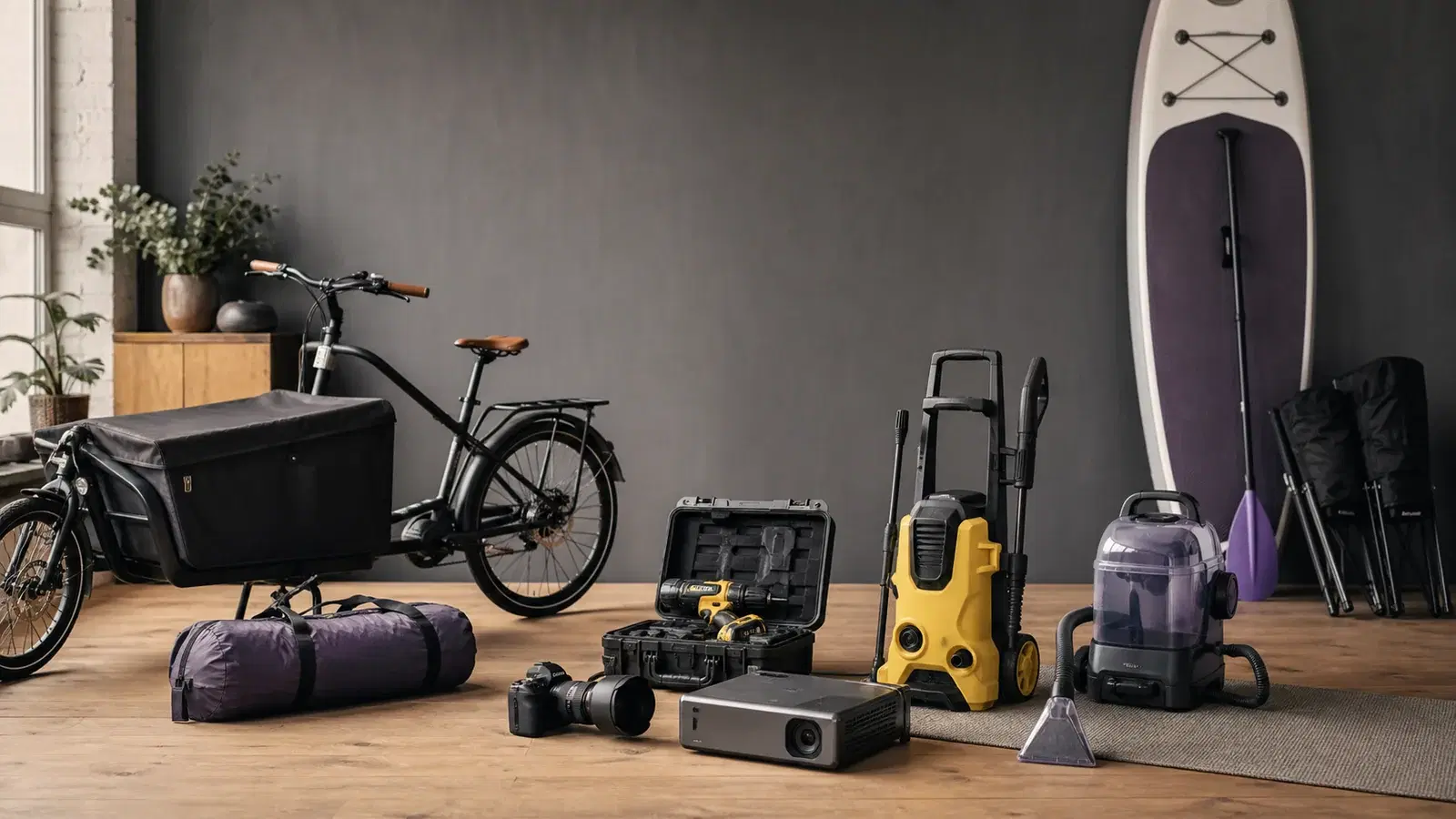
Five questions to ask before buying
Ownership means finding space, maintaining equipment and buying accessories as well as paying the shop price. A move-out carpet clean, extra tables for a celebration and a roof box for one trip each deserve a different comparison between rental, ownership and a service.
Count your time as well — collecting the item across town, learning it, cleaning it, returning it. If a professional gets the same result in two hours and the DIY version eats your weekend, paying for the service is often the better third option.
Separate rental cost from available funds. A €300 Naudokis deposit hold reduces the available card limit without being charged as the rental price. Several holds at once — for a van, tools and event kit — can matter more than a small difference in daily rates. Check release conditions rather than assuming the limit becomes available immediately on return.
Checklist
- How many days will I genuinely use this in the next two years?
- What will rental cost after transport, accessories and cleaning?
- Do I have the space and interest to store and maintain it?
- Can I check its condition, safety and supplied equipment?
- Would paying for the finished service be simpler?
Home and cleaning
With cleaning machines, the surface and the drying matter as much as the machine: check compatibility, the permitted detergent, filter and tank condition, and how long things will take to dry. If carpet, condensate or run-off cannot be dried or removed safely, pick another date or use a cleaning service.
Carpet and upholstery extractor
- Rent when
- For a deep clean a few times a year, after building work or before moving out.
- Buy when
- If pets or young children mean you will use it regularly throughout the year.
- What to check
- Both tanks, tools, hose, approved detergent and enough drying time for the fabric after cleaning.
Steam cleaner
- Rent when
- For a one-off clean of tile, grout or another heat-resistant surface.
- Buy when
- If you clean with steam regularly and most surfaces in the home are suitable.
- What to check
- Surface tolerance for heat and moisture, supplied tools, tank and valve condition, and materials excluded by the manufacturer.
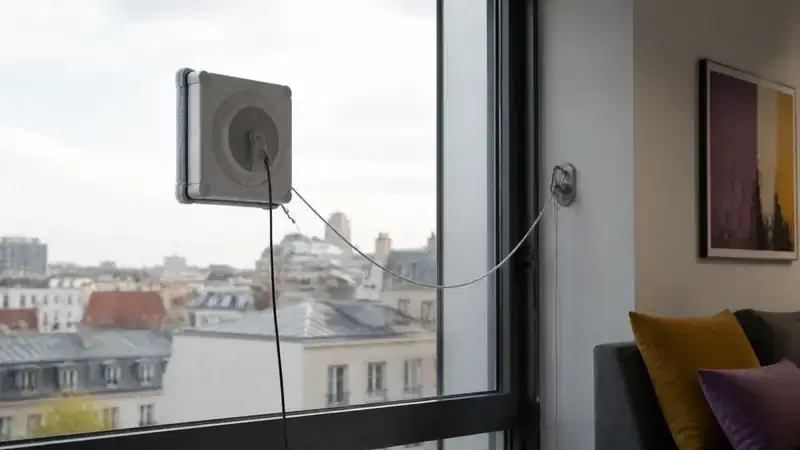
Window-cleaning robot
- Rent when
- For a seasonal clean of large flat panes or to try one model before buying.
- Buy when
- If you have many compatible windows and will use the robot regularly.
- What to check
- The model, glass and edge compatibility, safety cord, cable and cloths. Read the full window-robot guide.
Wet and dry vacuum
- Rent when
- After renovation, drilling or a liquid clean-up that the model is designed to handle.
- Buy when
- If a workshop or several sites need this type of vacuum all year.
- What to check
- The filter class for the dust, hose diameter, capacity, accessories and whether liquid collection is actually permitted.
Dehumidifier
- Rent when
- After a leak or renovation, once the source of moisture has been dealt with.
- Buy when
- If humidity needs long-term control rather than a short drying period.
- What to check
- Capacity, operating temperature, tank or continuous drain, power use and a safe route for condensate.
Pressure washer
- Rent when
- For seasonal cleaning of paving, a yard or a suitable façade.
- Buy when
- If a large area needs cleaning several times each season and storage is available.
- What to check
- Pressure adjustment, nozzle, hose and the surface: an aggressive jet can damage timber, joints and finishes.
DIY and construction
Choose for the material, dimensions and scale of the job, then include blades, abrasives, fuel and a possible extension in the price. Our tool rental guide covers model choice and safety in detail.
Demolition hammer
- Rent when
- When breaking material is a short renovation stage rather than regular work.
- Buy when
- Consider it only with future demolition planned and the skills to do it.
- What to check
- Whether you can do the work yourself, time for rubble removal and a specialist's alternative quote.
Tile cutter
- Rent when
- When one room needs more precision than your existing equipment provides.
- Buy when
- Compare ownership if the same tile formats recur in future projects.
- What to check
- The number of cuts, tile size, blade costs and whether the materials are already on site.
Floor sander
- Rent when
- When floors are restored only once in many years.
- Buy when
- Treat ownership as regular trade equipment rather than a purchase for one property.
- What to check
- Allow for preparation, sanding, cleaning and finishing, and compare a restoration-service quote.
Plate compactor
- Rent when
- When compaction is one stage of a garden project.
- Buy when
- Compare ownership if similar sites are planned in later seasons.
- What to check
- Whether the ground is ready, who transports the machine and the price for the complete period.
Earth auger
- Rent when
- When all fence or deck holes can be prepared in one session.
- Buy when
- Compare the purchase with the number of future fencing or planting jobs.
- What to check
- Ground suitability, underground-service checks and the option of hiring an operator for the drilling.
Wood chipper
- Rent when
- When branches can be collected for a single pruning day.
- Buy when
- Assess yearly branch volume, cutter maintenance and storage before purchasing.
- What to check
- Gather suitable branches before collection and compare chipping with a removal service.
Transport
Compatibility is per car, not per product: check every component's weight limit and the dimensions you'll gain. Four electric bikes can overload a four-bike carrier, and even a compatible roof box can push the combined load past the car's roof limit.
Cargo van
- Rent when
- For a move, one bulky delivery or a short project.
- Buy when
- If regular transport justifies ownership, insurance and maintenance.
- What to check
- Internal dimensions, door opening, payload, overall height and load points. Read the van selector.
Car trailer
- Rent when
- For garden waste, furniture or materials over a few days.
- Buy when
- If you use a trailer often and have a secure, lawful place to keep it.
- What to check
- Trailer and combination masses, licence entitlement, hitch, lights, tyres and load securing.
Roof box
- Rent when
- For one family, skiing or other seasonal trip.
- Buy when
- If it is used for several trips each year and can be stored dry.
- What to check
- Roof-bar compatibility, the car's roof limit, locks, fastening and the vehicle's new overall height.
Car bicycle carrier
- Rent when
- For one or two trips a year.
- Buy when
- If you carry bikes regularly using the same mounting system.
- What to check
- Bike count and weight, visibility of the plate and lights, locks and suitability for electric bikes.
If the car itself is rented, use our guide to price, deposits and excess.
Events and sound
Rent the whole system, not just the headline item — stands, cables, power and the signal source — and run a full rehearsal. Outdoors, agree who watches the weather and at what point the model's stated limits mean the equipment comes down.
Projector
- Rent when
- For a presentation, film night or one event.
- Buy when
- If it is used regularly in the same room.
- What to check
- Brightness in the actual lighting, resolution, connections, throw distance, cables and the playback device.
Projection screen
- Rent when
- When the wall is unsuitable or the event needs a tidy mobile setup.
- Buy when
- If you run regular events using the same format.
- What to check
- Dimensions, aspect ratio, stand stability, packed length and a safe position in the audience flow.
PA speaker system
- Rent when
- For a party, ceremony or one-off event.
- Buy when
- If you provide sound regularly and can maintain the system.
- What to check
- Suitability for the room, stands, power, leads, mixer, microphone inputs and local noise limits.
Wireless microphones
- Rent when
- For a conference, ceremony or performance.
- Buy when
- If wireless sound is a recurring need and you can manage batteries and frequencies.
- What to check
- Receiver, transmitter count, batteries, connectors and a wired spare for an important event.
Event lighting
- Rent when
- For a one-off stage, party or photo backdrop.
- Buy when
- If the same system is installed safely and regularly.
- What to check
- Power, control, stands, fixings, cable routes and the manufacturer's safety requirements.
Folding chairs and tables
- Rent when
- For a larger celebration that needs extra furniture for a few days.
- Buy when
- If events are regular and you have storage and transport.
- What to check
- Exact quantities, stability, stains and damage, packing, transport and how missing units are charged.
Event marquee
- Rent when
- For a one-off outdoor celebration or trading space.
- Buy when
- If you have a trained setup team and use the same size regularly.
- What to check
- The model's wind limit, ballast or anchors, ground conditions, installation responsibility and a bad-weather plan.
Photography and technology
Test the device, batteries, cards, apps and file transfer before the trip, not during it. And before returning anything, copy your files, take out your cards and sign out of every account so no personal data stays behind.
Camera and lens
- Rent when
- For a trip, event, shoot or to try a system before buying.
- Buy when
- If it is a frequently used work or hobby tool and you know which system suits you.
- What to check
- Lens glass, body and ports, shutter operation, batteries, charger, memory-card type and the full kit.
Action camera
- Rent when
- For one active trip or a specific shoot.
- Buy when
- If it is used on many trips and you own the matching mounts.
- What to check
- Body, waterproofing conditions, batteries, mounts, memory card and deletion of your data before return.
Drone
- Rent when
- For a specific project when you already know where and how you may fly legally.
- Buy when
- If you fly regularly and need that model's capabilities over time.
- What to check
- Class and mass, operator registration, pilot requirements, geographical zones, batteries, app access and insurance.
Sport and leisure
Choose equipment for the person, route and weather, then assemble and test it before leaving the rental point. A missing fin, broken tent pole or unsuitable binding is no longer a minor handover issue once you are outdoors.
Stand-up paddleboard
- Rent when
- For a few summer days, a holiday or to try the right size.
- Buy when
- If you paddle regularly and can transport and store it safely.
- What to check
- Weight limit, pump, fin, leash, valve, repair kit and buoyancy equipment suited to the place and activity.
Kayak
- Rent when
- For one outing, a seasonal trip or to try a different type.
- Buy when
- If you paddle often and have transport and storage.
- What to check
- People and luggage limits, hull, paddles, buoyancy equipment, route, weather and collection point.
Skis or snowboard
- Rent when
- For one trip, a growing child or a different setup.
- Buy when
- If you ride regularly, know your measurements and can maintain the equipment.
- What to check
- Size, edges, base and bindings adjusted by a competent technician. Avoid a helmet with an unknown impact history.
Camping kit
- Rent when
- For a first trip, festival or occasional weekend outdoors.
- Buy when
- If you camp often and know the weight, size and season rating you need.
- What to check
- A complete dry tent, mattress condition, stove compatibility, sleeping-bag cleanliness and temperature rating.
When rental is not a good choice
Some things shouldn't be rented at all. If you can't reliably assess an item's safety or hygiene — a helmet, a child seat, a climbing rope, a fall-arrest device — it may look undamaged after an impact while its protective performance has quietly changed.
The same caution applies to medical, skin-care and oral-care equipment. Ask how it's disinfected, which parts are single-use and whether a specialist has to fit it. Without a clear answer, price and convenience shouldn't settle it.
Think about what failure would cost at an important event or job. If one projector dying would stop a conference, arrange a tested spare or use a supplier who can swap it fast.
- Unknown safety history. Use your own equipment or professionally managed kit with documented checks.
- Hygiene-sensitive equipment. Confirm that it can be cleaned correctly and disposable parts replaced.
- Cheap, frequently used items. Repeated handovers can cost more than ownership.
- A high consequence of error. Consider paying for a professional service instead of renting the equipment.
Rental also stops making sense when you'd use the item often but face a long trip for every handover. Compare a sound second-hand purchase, shared ownership with someone you know, or a service that leaves the maintenance with the provider.
For commercial work, check the owner allows it and that the rental period covers setup and cleaning. A one-day consumer rental rarely suits intensive use by a team — or a job where a client's deadline depends on the equipment.
One handover checklist for every category
Do the handover calmly, before the project or trip begins. Ask to see the item started, stopped safely and set up. If something doesn't work as agreed, record it there and then — not after several hours of use.
Checklist
- The model, size, purpose and dates match the reservation
- Condition and existing damage are photographed
- The complete kit is counted and tested briefly
- Consumables, cleaning and normal wear are clear
- Deposit, liability, late return and cancellation are agreed
- You have instructions and a fault contact
- Return place, time and acceptance are confirmed in writing
At return, repeat the same condition photographs, count the kit and get an acceptance record. If the owner isn't there, photograph where and when you left it and send a message — that gives both sides a clear moment when the item came back.
Compare at least two offers with the same equipment, starting with all rental categories. After the first rental, note how much you actually used the item — it makes the next rent-or-buy call more accurate.
Related articles
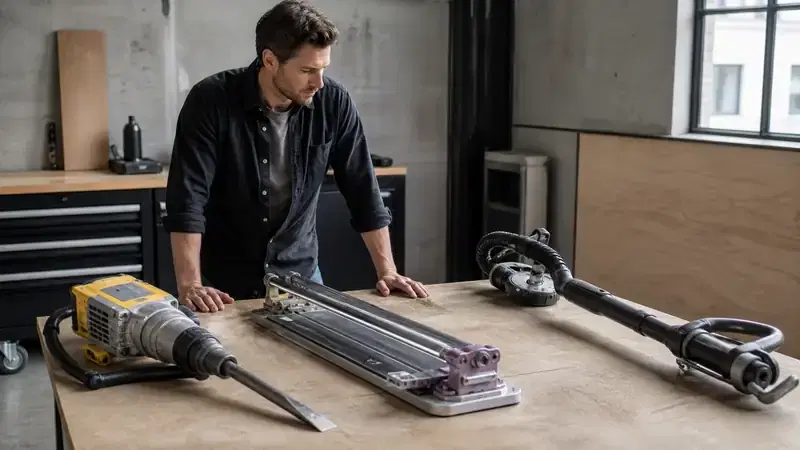 Tools and constructionRent or buy tools? A simple calculation and 15 examples10 min read
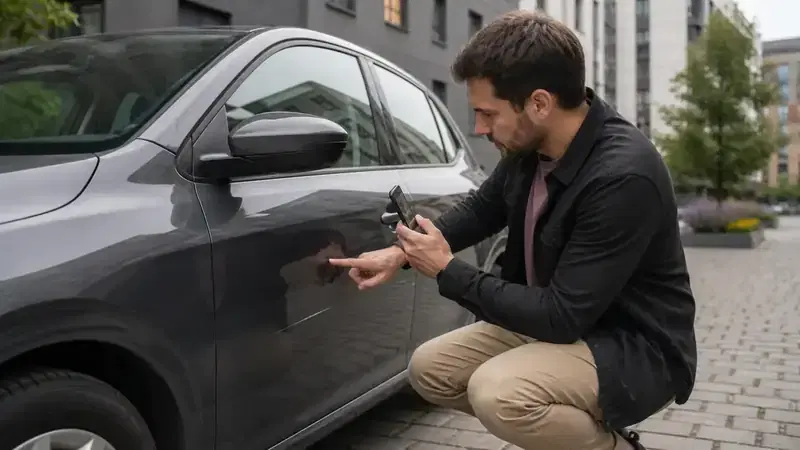 Vehicle rentalCar rental: what to check before you reserve8 min read
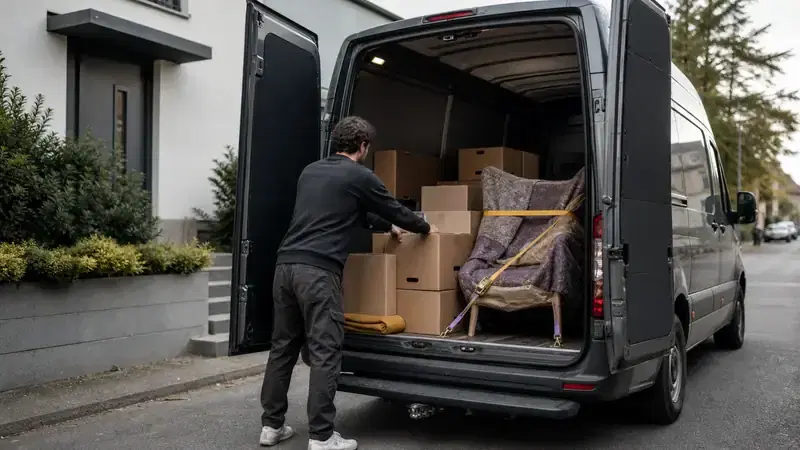 Vehicle rentalVan rental: choosing the size, payload and return terms8 min read
 Home and cleaningWindow-cleaning robot rental: when it works and what to check6 min read
Sources
The 30 items were selected for occasional use, the balance between purchase and rental cost, storage and maintenance effort, and whether condition can be checked at handover. This is a practical decision list, not a popularity ranking. Higher-risk equipment is held to a stricter standard for condition and history.
- The circular economy explainedCouncil of the European Union
- Product-as-a-Service: a consumer model for a more circular economyEuropean Commission Joint Research Centre
- Open Category — Low Risk — Civil DronesEASA
- Bepiločiai orlaiviai: reikalavimai nuotoliniams pilotamsTransporto kompetencijų agentūra
- Bepiločiai orlaiviaiLietuvos transporto saugos administracija